Side projectFinance2 weeksJul 2024
Tokolator
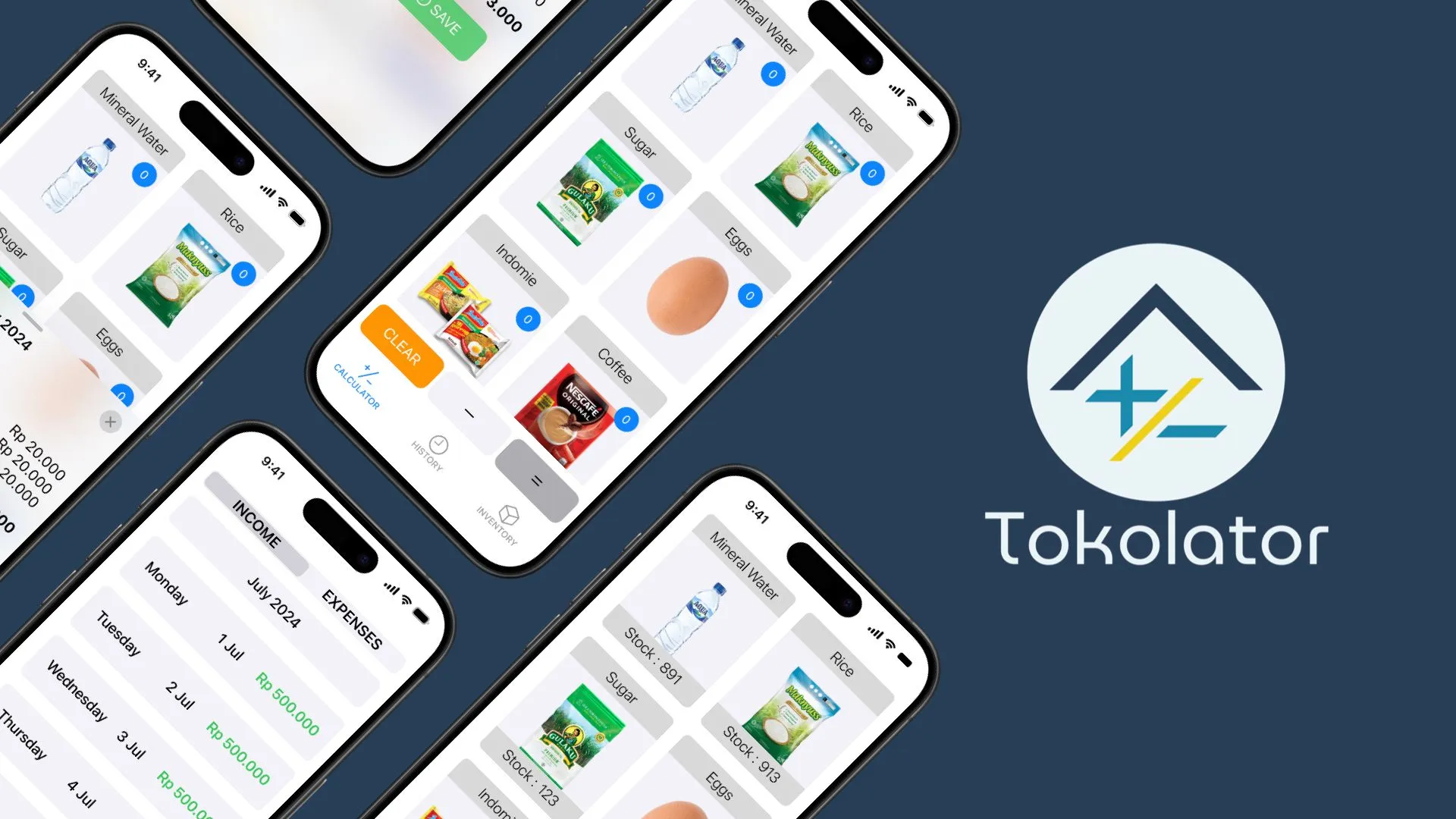
A simple iOS calculator for shop owners to total transactions and manage inventory, built to stay easy for users with vision or dexterity issues.
- Related to
- Apple Developer Academy @BINUS
- Key skills
- Product Management
- Scrum Methodology
- Stakeholder Management
- Product Roadmapping
User & Market Research- User Research
- User Personas
- Value Proposition Canvas
User Experience Design- User Story Mapping
- User Flow
- Information Architecture
- Navigation Patterns
- UI/UX Principles
- Tools
 Jira
 TestFlight
How much time do you have?
The Team Behind 👥
- Product Manager
- Brendan Alexander Soendjojo
- Graphic Designer
- Mikhael Hose
- UI/UX Designer
- Rayhan Rafferty
- Developer
- Christopher Nathanael Tessy, Muhammad Akmal Hakim, Rangga Hadi Putra
Introduction ✏️
Tokolator is a simple and user-friendly iOS calculator app to calculate transactions and manage item inventories for shop owners. It is designed for easy calculations for any users despite any vision and dexterity issues. This 2-week project was developed by a team of six to accommodate the needs of Emak Sri as our client in this project.
Problem Statement 💡
Objectives 🎯
Objective 1: Calculate Multi-Step Calculations Easily
- KPI 1: Enable users to calculate transactions involving multiple items effortlessly.
Objective 2: Track Monthly Income and Expenses
- KPI 1: Record daily transaction details accurately.
- KPI 2: Provide a summary of total income and expenses for any selected month.
Objective 3: Manage Shop Inventory Changes
- KPI 1: Allow users to add new inventory items, edit stock quantities, and update prices easily.
User Persona 🧑🦳
Emak Sri - A 65-year-old part-time shop owner “I need to operate my shop as easily and efficiently as possible on a day-to-day basis.”
Behavioral Patterns
- Uses a smartphone primarily for communication (WhatsApp), basic apps (Camera, Gallery), and internet browsing (Safari, YouTube).
- Prefers simple and easy-to-use interfaces due to potential vision and dexterity challenges.
- Often performs calculations for daily activities such as budgeting, medication management, and cooking recipes on paper.
Pain Points
- Finds traditional calculator apps difficult to use due to small buttons, small text, complex functions and less legibility when the battery is running low.
- Difficult to find calculator that accommodates vision and dexterity issues.
- Struggles with remembering and performing multi-step calculations.
- Requires adaptation to shift from traditional to digital calculator
Goals
- To access a simple and user-friendly calculator app (e.g. larger buttons, larger text, contrast).
- To perform calculations easily despite vision and dexterity issues.
- To have features that support one of their daily activities.
- To get assistance in using digital calculator.
Key Features 🔧
Transaction Calculator
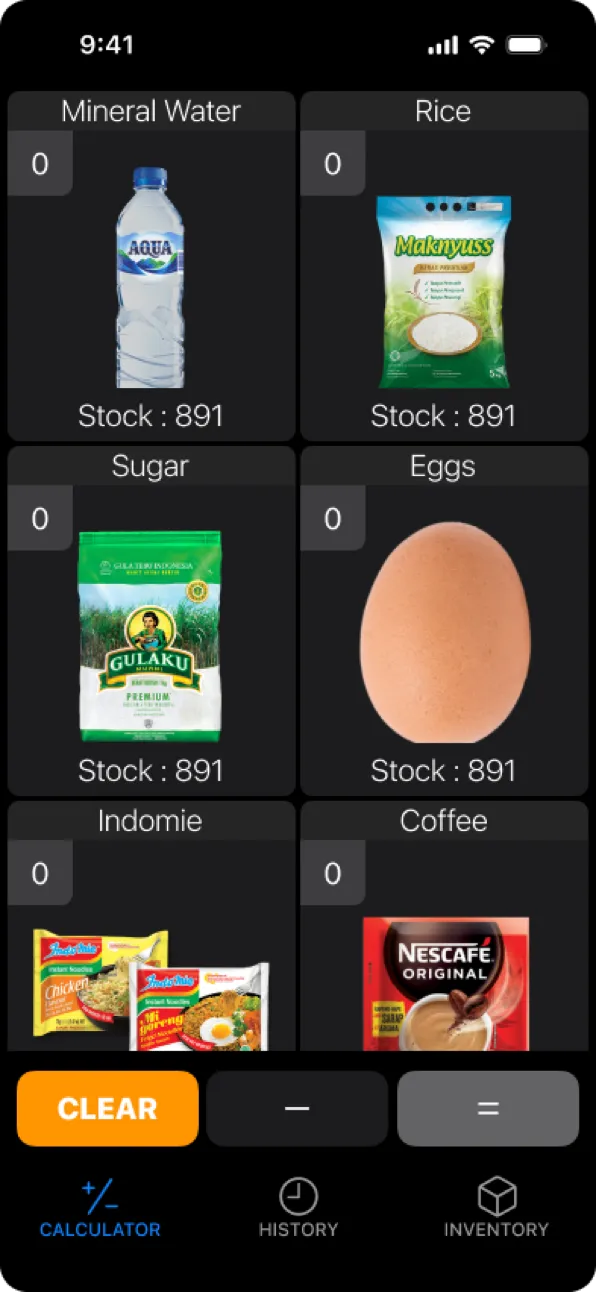
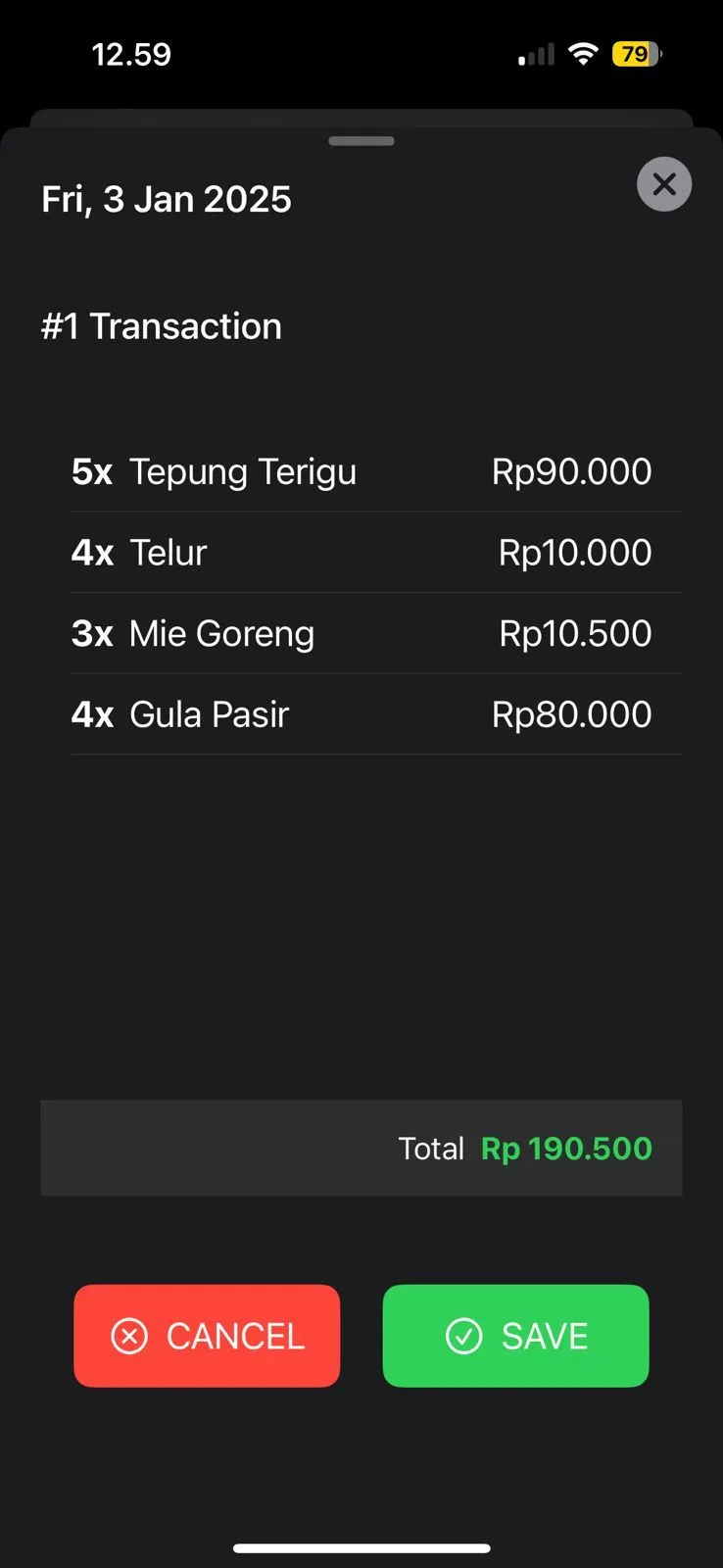
A simple calculator featuring large item buttons for easy selection. Users can add items to a transaction by selecting them, with options to undo the last added item or clear all selections. Once the transaction is complete, pressing the “=” button finalizes and records it.
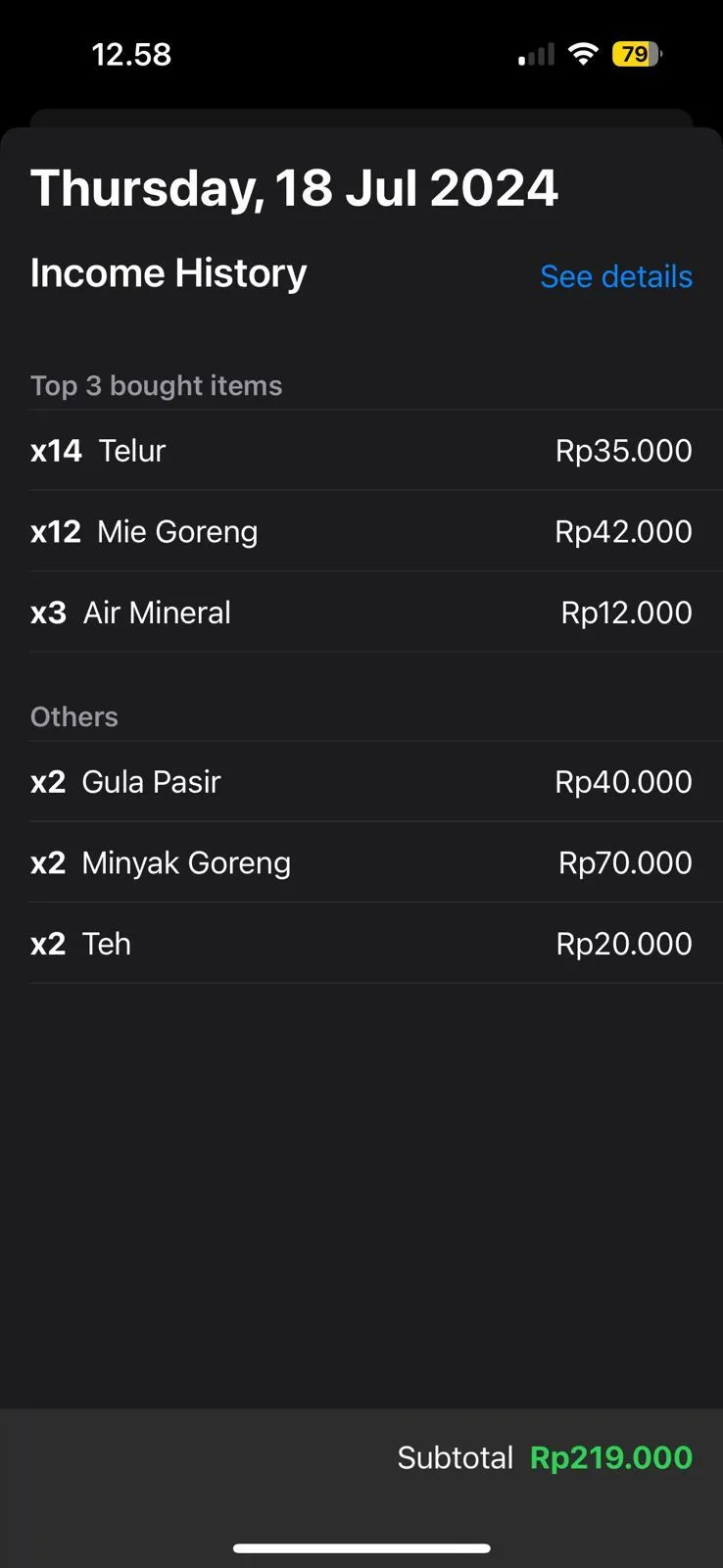
Income and Expense History
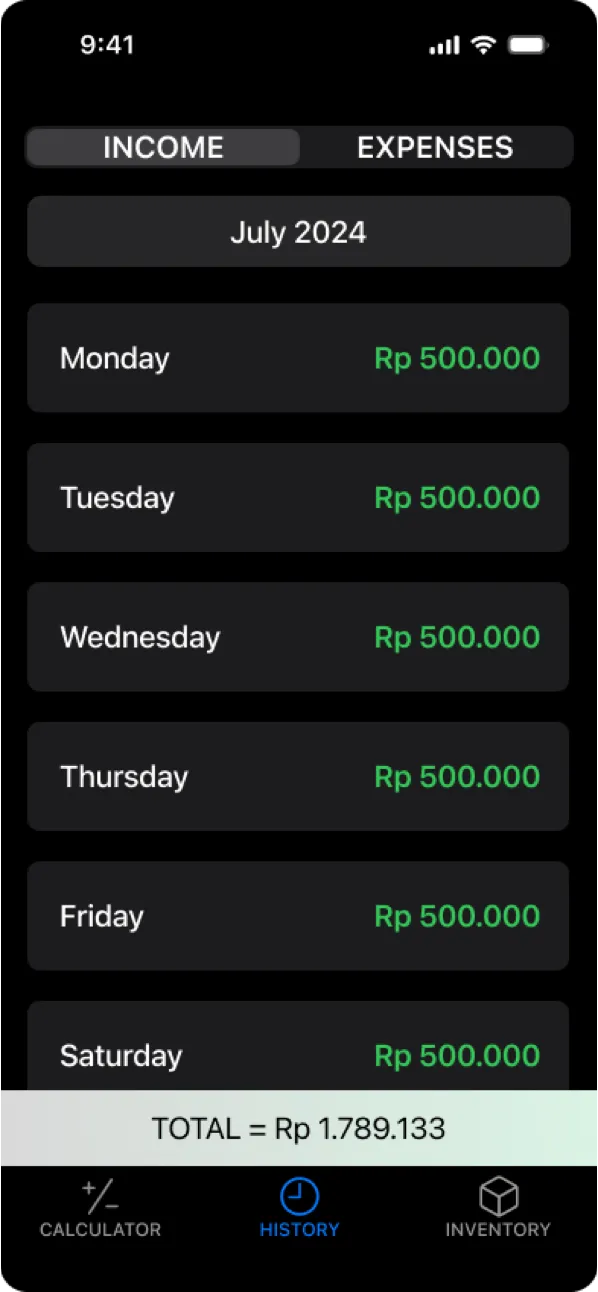
Provides a daily summary of income and expenses for each month. Transaction histories include details of items sold and restocked on a given day.
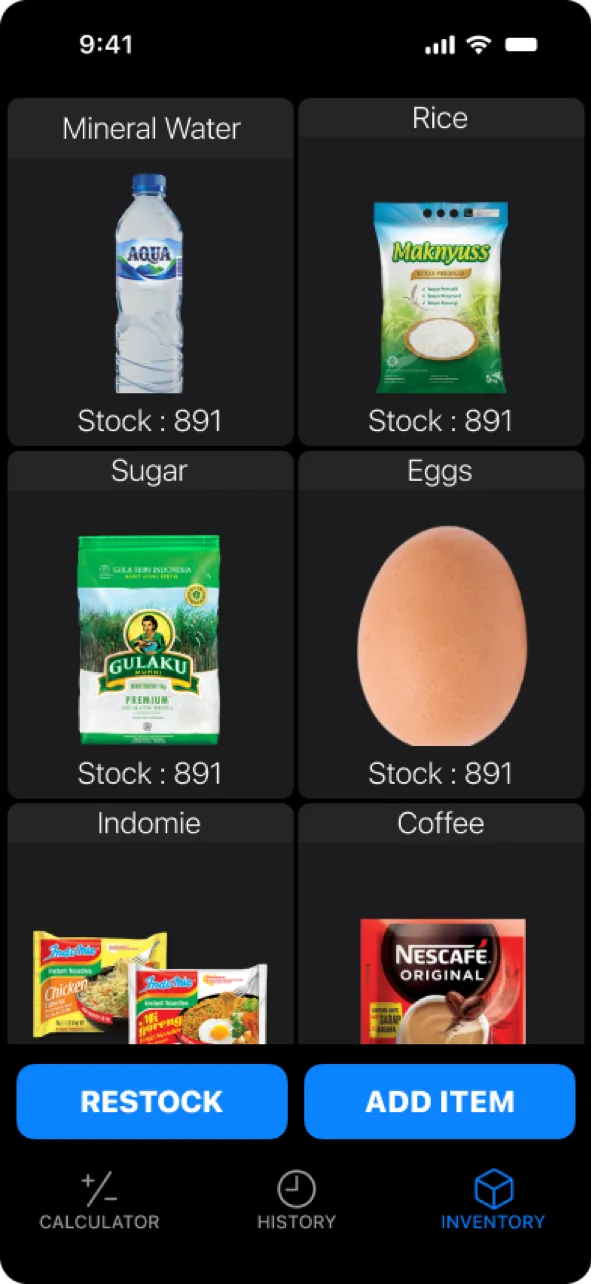
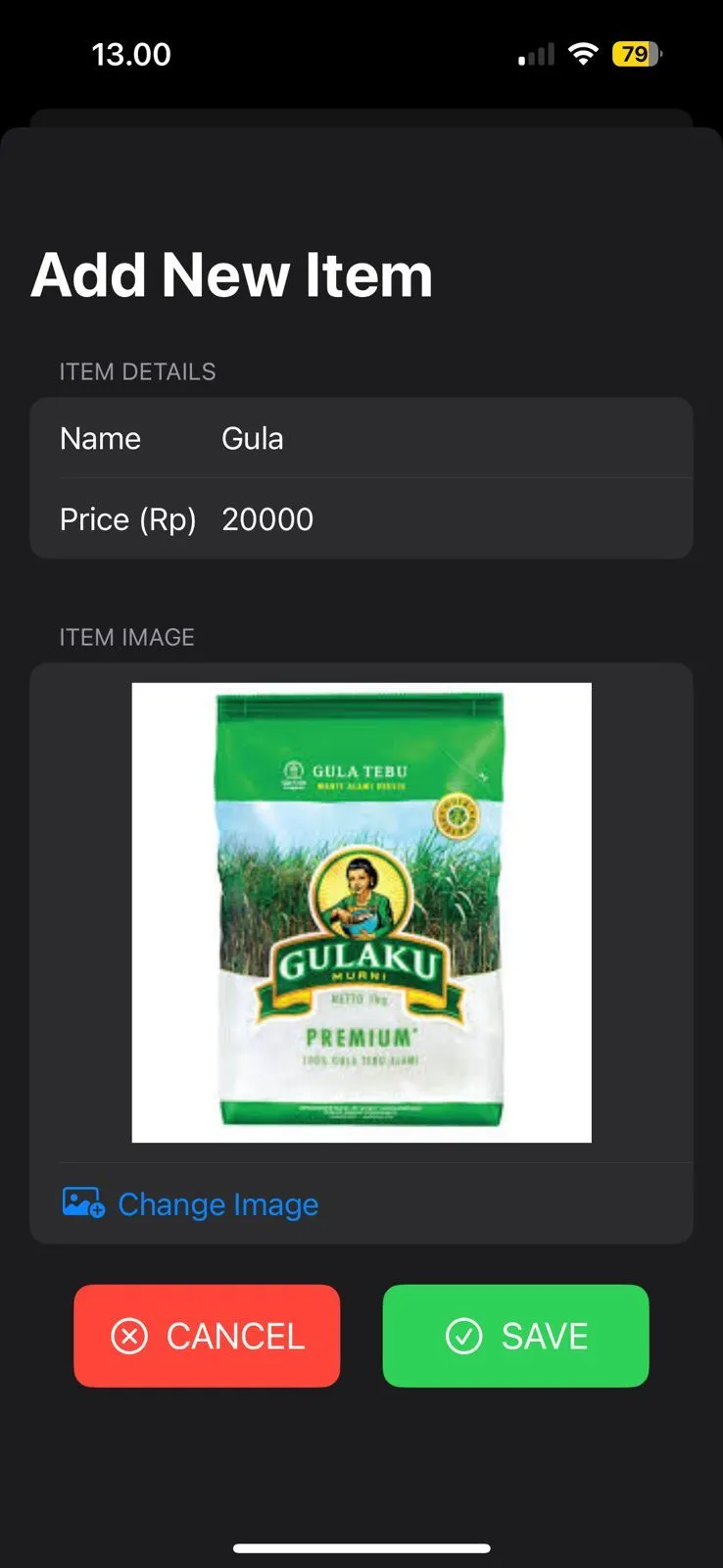
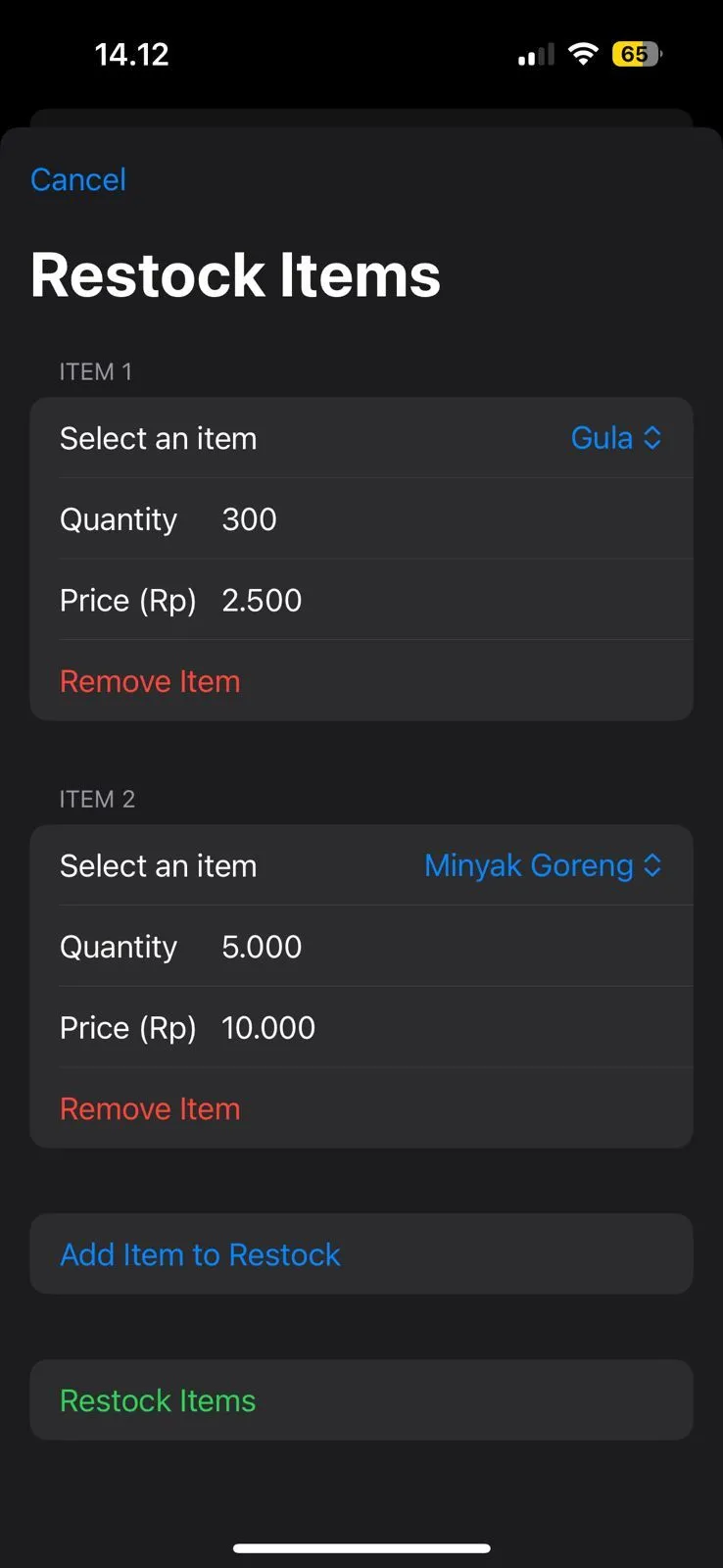
Inventory Management
Displays all items being sold in a single view, allowing users to track inventory. Users can easily restock items and adjust their prices as needed.
For more details, do check out the product backlog! Click here
User Requirements 👤
-
As Emak Sri, I want to add the items that the customer buys and record it as sales (High priority)
This user has a problem with using a traditional calculator and writing it on paper.
-
As Emak Sri, I want to know my history of past sales income and stock expense with their details (High priority)
This user wants to know the performance of each item to know the current sales trend.
-
As Emak Sri, I want to update my inventory after every restock (Medium priority)
This user wants to keep track of the current stock of the shop’s items.
-
As Emak Sri, I want to know my monthly and accumulated profit (Low priority)
This user wants to know how the shop performs each month.
Design Requirements 🖌️
- Color and Contrast:
- Use high-contrast colors for readability.
- Avoid overwhelming users with too many colors; keep the palette simple and consistent.
- Dark Mode Support: Ensure all elements are legible in dark mode.
- Typography: Use SF Pro Text for all text elements.
Technical Requirements ⚙️
- Code Structure: SOLID principles
- Code Architecture: MVVM (Model-View-View Model)
- Localizations: English & Indonesian
Project Milestones 🗓️
| Milestone | Description | Due Date |
|---|---|---|
| User research | User interview | 10 July 2024 |
| User stories & requirements definition | • User persona • User stories |
11 July 2024 |
| Lo-fi design | Prototyping with minimal assets | 11 July 2024 |
| Hi-fi design | Design with colored assets and complete user flow | 12 July 2024 |
| Sprint 1: Inventory management | Add new items to the inventory and change their prices | 12 July 2024 |
| Sprint 2: Transaction calculator, income & expenses history, localization | • Add items, edit items, reset calculations, and save calculations. • Transaction details and total transactions for income and expenses • Localization: English and Indonesian |
17 July 2024 |
| App showcase | MVP showcase to the client | 18 July 2024 |
Challenges 🚧
Unclear Information Architecture
- Problem: It was challenging to clearly discuss the relationships between our features, such as the transaction calculator, history, and inventory management, verbally.
- Solution: We decided to create an Entity-Relationship Diagram together to clarify the models and the relationships between the objects, ensuring a clear foundation for development.
Challenging Accessible UI/UX Design
- Problem: Determining the right design approach for our transaction calculator was particularly difficult because we needed to accommodate the vision and dexterity challenges of Emak Sri, our user. It was essential to make the items visible while ensuring that the calculation process was easy to perform.
- Solution: We consulted with our mentors for advice on the item buttons and undo button functionality in case the user made a misinput. Their valuable feedback helped guide us in improving the app’s design and accessibility.
My Contributions 💪
Discovery & Research Phase
- Conducted a semi-structured interview with Emak Sri as our client to dive into her habits and preferences.
Ideation & Planning Phase
- Defined the target audience using user personas.
Design & Development Phase
- Created detailed product backlogs in Jira for team clarity.
- Planned and executed 2 one-week sprints using Jira, delivering 40% of the product backlog in the first sprint.
Launch & Iteration Phase
- Released MVP to TestFlight for user testing.
Future Roadmaps 📁
While the product has successfully met its objectives, there is significant potential for improvement in future iterations. The following are the top priorities for improvement, ranked by their importance to the product’s functionality:
- Introduce a stepper for each item to allow users greater flexibility in calculations, replacing reliance on a single undo button.
- Implement a deletion function for transaction histories to correct any misinputs and ensure accurate records.
- Add a camera feature that enables users to capture images of items directly when adding new entries to the inventory.
Reflections 📝
As a product manager, I have:
- Gained a deeper appreciation for the importance of creating a clear backlog with detailed acceptance criteria to streamline discussions with developers and designers and facilitate efficient task division. This approach makes it easier to visualize workload distribution and track overall project progress.
- Understood the importance of asking the right questions to the right person. We relied on expert opinions rather than directly asking users about their preferences when deciding on UI and UX. This approach sometimes overlooks user needs, which can lead to an unsatisfactory experience. Listening to users is essential to ensure the app meets their expectations.
- Recognized the critical role of user testing after completing the MVP in evaluating the user experience, including the app’s user flow and features. Due to the two-week timeline being heavily focused on development, we were unable to include user testing. In the future, I will ensure that testing is incorporated into the timeline when planning a product roadmap.